
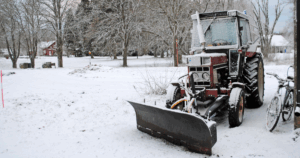
You’re mid-route, the snow’s still coming down, and suddenly your plow won’t lift. Suddenly, you need snow plow repair. It’s one of the most frustrating failures a snow removal operator can face and one of the most common. At WMTS, we’ve had more calls about lift issues than any other snow plow malfunction, especially once December hits and the real storms roll in. A non-responsive plow can leave you stranded, but understanding the underlying causes and the urgency of repairs is crucial.
It’s Not Always the Motor, But It Might Be
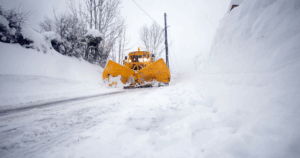
When your snow plow fails to lift, many assume the lift motor is the culprit. While age, rust, or electrical wear can indeed cause motor failure under load, the issue often stems from a domino effect of other problems. Weak voltage, corroded ground wires, or loose connections can lead to intermittent performance that mimics a dead motor. Even new plows can struggle in cold weather due to undersized batteries that can’t provide sufficient amperage to raise the blade.
A plow that lifts slowly or not at all is a critical warning sign. This could indicate thick fluid, a jammed pressure valve, or an overheating motor. Your plow is communicating a problem, and ignoring these signals will only lead to more expensive repairs down the line.
Hydraulic Systems Don’t Lie
Often overlooked, contaminated hydraulic fluid or fluid with incorrect viscosity for cold weather can cause lift failure. As temperatures plummet below freezing, the hydraulic fluid expands and contracts. If the system wasn’t properly flushed or filled before the season, it can impede movement.
We’ve encountered a range of problems, including ice crystals in the reservoir, pressure spikes leading to blown seals, and neglected, clogged filters. These issues often lead to lift failure and can further damage the pump and solenoid valves, turning a simple $200 flush into a $900 repair.
Hydraulic cylinders also pose a risk. Frequent, heavy, or rapid lifting can lead to leaks or binding in the cylinders. A leaking cylinder not only fails to operate but can also deplete your entire system while you’re working, potentially leaving you stranded in a storm.
What It Costs to Wait
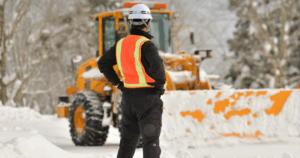
Snow plow lift failure leads to significant downtime, costing money through missed hours, subcontracting losses, and damaged client relationships. Addressing lift issues promptly is crucial, as delayed repairs can result in towing, rescheduled routes, and even greater expenses than the repair itself.
One contractor learned this the hard way when he waited until his plow’s lift completely stopped. A simple $45 part and a 20-minute fix could have saved him a thousand dollars and three client complaints if he had brought it in when the problem first started. Instead, he lost a full day of work and incurred two service calls trying to revive a system that needed a minor snow plow repair in Western Michigan.
How WMTS Handles Lift Repairs
At WMTS, we prioritize thorough diagnostics over guesswork. Our lift diagnostics include a full voltage trace, system pressure test, and cold-weather fluid inspection. We meticulously check solenoids, wiring, mounts, and all moving parts to pinpoint the exact cause of the problem. This approach ensures we find the real issue rather than simply replacing parts and hoping for the best.
Most lift repairs can be completed on the same day if identified early. We maintain a stock of common parts for popular plow brands, enabling us to flush your system, rewire connections, or replace your lift cylinder without lengthy waits. Should your plow have more complex issues, we provide a comprehensive report, ensuring you understand the problem and its potential recurrence.