
If you’ve ever opened your RV for the season and found a cracked water line or a mildew-soaked mattress, you’re not alone. RV winterizing is one of those tasks that seems simple until it’s not. It’s also one of the top reasons RV owners come to us in the spring: frustrated, surprised, and facing repairs that could’ve been avoided with a bit more prep.
RV systems aren’t designed to weather freezing temps without help. When water sits in lines, pumps, or tanks and freezes, it expands. That expansion splits fittings, bursts hoses, and destroys seals. But it’s not just the plumbing. Poor winterization affects electrical systems, batteries, tires, seals, roofs, and even your RV’s interior. And in Michigan, skipping steps isn’t just risky; it’s asking for trouble.
The Mistakes We See Every Year
Every fall, we see RV owners rush through winterization in a hurry to get parked before the first freeze. That’s when corners get cut. They’ll drain the fresh water tank but forget the water heater. Or they’ll blow out the lines but skip the antifreeze. Sometimes, they think parking in a heated garage means they don’t have to do anything at all.
Another common one? Not bypassing the water heater. It’s easy to miss and even easier to assume the tank is empty when it’s not. When antifreeze goes straight into it or skips it entirely, cleanup can be a mess. We’ve also seen batteries left connected, holding a phantom charge all winter until they’re toast by March.
Even small oversights, like leaving food or moisture in cabinets, can lead to mold, pests, or odors that stick around for the season. When your RV comes out of storage in worse shape than you left it, that’s not just frustrating; it’s a repair bill waiting to happen.
Why DIY Doesn’t Always Work Out
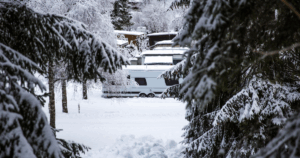
Plenty of RV owners winterize their own rigs. Some do a great job. Others watch a quick video, think they’ve covered it, then miss critical steps. What they don’t realize is how fast things go wrong once the temps drop. You don’t notice a cracked P-trap or split seal until spring, and by then, you’re dealing with leaks, mold, and damage that spreads fast.
RV plumbing is more sensitive than residential systems. So is the HVAC. So are the appliances. A few ounces of leftover water in the wrong spot can undo thousands of dollars of equipment. The same goes for sealant; if your roof seams or window seals aren’t checked before winter, freezing rain and snowmelt will find their way in. Then insulation gets soaked, ceilings buckle, and you’re looking at rehab instead of a refresh.
What Professional Winterization Really Covers
At WMTS, we go way beyond just pumping in antifreeze and calling it a day. A proper winterization includes draining every system fully, bypassing your water heater, treating lines and tanks with non-toxic antifreeze, disconnecting and storing batteries properly, and inspecting roof seals, slide-outs, and any exterior penetrations.
It’s also the perfect time to check on issues that only show up when things sit still, like moisture leaks, cracking seals, and slow battery drains. We treat winterization as a full systems check, not a five-minute pump-and-go.
If you’re not sure when your RV was last sealed, whether your water pump still runs dry, or if your A/C cover’s still holding tight, this is the time to get it checked. We’ve seen how small oversights turn into major repairs after just one winter.
Book Before the Freeze
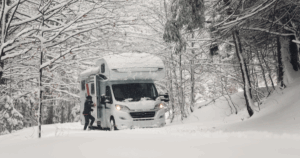
In Michigan, that first cold snap doesn’t wait for your schedule. We recommend winterizing by mid-October, earlier if you’re done traveling. Appointments fill fast once the temps drop, and when everyone tries to get in at once, you’re either waiting weeks or paying for repairs instead.
If you’re not confident winterization was done right last year, or if you’ve taken on a new RV and don’t know what’s been done, bring it by. We’ll walk you through it, handle every step, and make sure you’re not stuck dealing with a mess in the spring.